The Crossley Heath School
French
Here at The Crossley Heath School we really value languages and language learning. Students at Key Stage 3 learn both French and German, and it is compulsory for students to continue to learn at least one Modern Foreign Language at Key Stage 4. We also offer French and German at A-Level. German is spoken by over 130 million speakers and, due to the size and importance of its economy, is one of the most commonly used languages in business. French is one of the most widely spoken languages in the world and is an official language of the United Nations, the European Union, UNESCO and NATO. At a time of considerable political change in Europe and against the back-drop of a national decline in language learners, we give every single Crossley Heath student the chance to learn a foreign language and to recognise the wide-ranging benefits which learning a foreign language brings.
Language learning significantly enhances communication skills. We promote pair and group work and develop in our students the ability to express themselves clearly and listen to others. We aim to build the confidence in our students so that they feel happy to converse with native speakers when on foreign visits or holidays. Students are also encouraged to work independently and use their initiative to solve problems by making connections between French, German and English. Therefore, through learning French and German, students also have an improved understanding of English.
Through our study of topics such as Festivals and Traditions, we foster an understanding of different cultures and an appreciation and tolerance of difference. We require students to take risks and to work outside of their comfort zone, for example by talking to our foreign intern students, by taking part in our foreign language talent show or by participating in our highly successful exchange programme.
These skills are valued by universities and employers. Languages are used and can be helpful in lots of different jobs not only translation, interpreting or teaching. In fact, many employers reward people with language skills with extra salary because they know they are essential in today’s international business world. Therefore, we aim to dispel the myth that English is enough.
Grammar is taught explicitly from the start of Year 7, as our objective is to ensure that students can use the language accurately but also manipulate it creatively. Lessons are engaging and are taught by highly-skilled and enthusiastic subject specialists who are passionate about languages. Teachers use a range of activities including games, songs and languages websites to suit different abilities and learning styles. Lessons are conducted in French and German and students are expected to communicate with each other and their teachers in the language. The four skills of listening, speaking, reading and writing are practised as well as translation skills and, later, the ability to paraphrase and summarise. Students enjoy learning French and German at The Crossley Heath School, succeed highly in their exams and value the opportunities these subjects provide.
French at Key Stage 3
| Term 1 | Term 2 | Term 3 | |
|---|---|---|---|
| Year 7 | Module 1: La rentrée Greetings and say name Alphabet Numbers and say age Months and say birthday Objects in the classroom Likes and dislikes Genders Present Tense regular -er verbs Avoir Etre Adjectives Module 2: En classe Colours Telling the time School subjects Uniform School day Schools in France Negatives and Adjectives |
Module 2: En classe (continued) Module 3 Mon temps libre Seasons and weather Sports Other leisure activities Activities on mobile phone jouer à, faire de, verb faire, aimer + infinitive, forming questions |
Module 4: La vie de famille Pets Family members House Breakfast Bastille day possessive adjectives, -er verbs, partitive articl |
| Year 8 | Module 1: Vive les vacances (Holidays) Revision of present tense avoir + être Perfect Tense Module 2: J’adore les fêtes (Festivals) Present tense of –ir and –re verbs; revision of -er verbs; Near future tense |
Module 2: J’adore les fêtes (continued) Module 3: A loisir (Leisure activities) Revision of adjective agreement; revise forming questions; using negatives |
Module 4: Le monde est petit (Describe where you live and daily routine) pouvoir, reflexive verbs, preceding adjectives |
| Year 9 | Module 1 (10 weeks): Retour vers le futur (Return to the Future) Revision of near future tense Revision of modals pouvoir+devoir Learn Future tense Learn modal verb vouloir Learn pour+infinitive Module 2 (10 weeks): Quand j’étais jeune (When I was young) Revise Perfect and Present tense Learn Imperfect tense Revise the comparative |
Module 2: Quand j’étais jeune (When I was young) (Continued) Module 3 (10 weeks): Le Meilleur des mondes (A better world) Revision of negatives Learn the superlative Learn the Conditional tense |
Module 3: Le Meilleur des mondes (A better world) (Continued) Module 4 (7-8 weeks): Project on the Francophone world |
GCSE Curriculum
The Pearson Edexcel Level 1/Level 2 GCSE (9-1) in French allows students to develop their ability to communicate in French in both speech and writing. They will study language within a variety of thematic contexts relevant to their age and interests and will develop a greater awareness of the culture of French-speaking communities and countries.
Students will need to develop and use their knowledge and understanding of French vocabulary and grammar progressively through their course of study.
Subject aims:
The aims of this qualification are to:
- provide a coherent, satisfying and worthwhile course of study.
- develop confidence in, and a positive attitude towards, French and to recognise the importance of languages.
- provide a strong linguistic and cultural foundation for students who go on to study languages at a higher level post-16.
- develop students' ability and ambition to communicate independently in speech and writing with speakers of the language for authentic purposes.
- develop students' ability to communicate independently about subjects that are meaningful and interesting to them
- build students' confidence and broaden their horizons, enabling them to step beyond familiar cultural boundaries, develop new ways of seeing the world, and better understand relationships between the foreign language and the English language.
- enable students to become familiar with aspects of the contexts and cultures of the countries and communities where the language is spoken.
Thematic contexts
The vocabulary in this qualification enables students to communicate across a range of engaging and relatable thematic contexts, which are relevant to their current and future needs.
We asked students and teachers about the subjects that were meaningful and
interesting to them, and selected the following six broad thematic contexts to provide a focus for the teaching and learning of the vocabulary and grammar listed:
- My personal world
- Lifestyle and wellbeing
- My neighbourhood
- Media and technology
- Studying and my future
- Travel and tourism
Within our thematic contexts, students could use the specified vocabulary and grammar (Appendices 1 and 2) to listen to, read, speak and write about the following subjects:
| family | friends | relationships | equality |
| physical well-being mental well-being | food and drink | sports | places in town |
| shopping | transport | the natural world | environmental issues |
| social media and gaming | future opportunities | accomodation | tourist attractions |
Qualification at a glance.
The qualification consists of:
three externally-examined papers assessing separately listening, reading and writing
one speaking assessment set by Pearson and conducted by a teacher.
All assessments are marked by Pearson.
Each paper is available at Foundation or Higher tier. Students must be entered for a single tier across all papers.
Paper 1: Speaking in French (*Paper code: 1FR1/1F and 1H)
Internally conducted and externally assessed:
Foundation tier: 7-9 minutes plus 15 minutes' preparation time; 50 marks
Higher tier: 10-12 minutes plus 15 minutes' preparation time; 50 marks
25% of the qualification
Students are assessed on their ability to speak using clear and comprehensible language for a range of audiences and purposes, in different contexts, which are relevant to their current and future needs and interests. There are three consecutive tasks:
Task 1: Read aloud (12 marks)
Read aloud a short text and undertakea short, unprepared interaction relating to the text. In the read aloud task itself students will be assessed on their pronunciation and in the short interaction that follows students will be assessed on their communication. The task card will be allocated by Pearson.
Task 2: Role play (10 marks)
Undertake a transactional role play, in a setting taken from the defined list on pages 16-17. The task card will be allocated by Pearson.
Task 3: Picture task (12 marks) with conversation (16 marks)
Students select their thematic context for Task 3 in advance of the assessment. Students select one option fromachoice of two of the six thematic contexts. The two options will be randomly generated by Pearson. The task card will be allocated by Pearson.
Describe a picture stimulus, related to the selected thematic context. Students have a choice of two pictures on the stimulus card. Answer two compulsory questions related to the subject matter of the picture, then move on to a short unprepared conversation developed from the same thematic context.
Paper 2: Listening and understanding in French (*Paper code: 1FR1/2F and 2H)
Written examination:
Foundation tier: 45 minutes, including 5 minutes' reading time, 50 marks
Higher tier: 60 minutes, including 5 minutes' reading time, 50 marks
25% of the qualification
Students are assessed on their understanding of standard spoken French by one or more speakers, across a range of formal and informal contexts, and in familiar and unfamiliar settings.
Section A: Listening (40 marks)
Students respond to multiple-choice, multiple-response and short-answer open response questions. All questions are set in English and students produce all responses in English.
Section B: Dictation (10 marks)
Students are assessed on their ability to transcribe spoken French into written French. They will be rewarded for their accuracy of spelling based on their knowledge and understanding of the sound symbol correspondences (SSCS).
Paper 3: Reading and understanding in French (*Paper code: 1FR1/3F and 3H)
Written examination:
Foundation tier: 45 minutes, 50 marks
Higher tier: 60 minutes, 50 marks
25% of the qualification
Students are assessed on their understanding of written French across a range of formal and informal contexts, and in familiar and unfamiliar settings.
Section A: Reading and Understanding (40 marks)
Students respond to multiple-choice, multiple-response and short-answer open response questions based on these texts. All questions are set in English and students produce all responses in English.
Section B: Translation into English (10 marks)
Students translateapassage from French into English, with instructions in English.
Paper 4: Writing in French (*Paper code: 1FR1/4F and 4H)
Written examination:
Foundation tier: 1 hour 15 minutes; 50 marks.
Higher tier: 1 hour 20 minutes; 50 marks.
25% of the qualification
Students are assessed on their ability to communicate effectively through writing in French for different purposes and audiences. Students are required to produce responses of varying lengths and types to express ideas and opinions in French. The instructions to students are in English.
Foundation Tier .
- Question 1: picture-based task (8 marks)
- Question 2: one of two open-response questions, set in formal context (14 marks)
- Question 3: one of two open-response questions, set in informal context (18 marks)
- Question 4: translation into French (10 marks)
Higher Tier:
- Question 1: one of two open-response questions, set in informal context (18 marks)
- Question 2: one of two open-response questions, set in formal context (22 marks)
- Question 3: translation into French (10 marks)
- A recommended word count is specified for each open-response question.
A-level Curriculum
Studying French at A-level enables students to develop their linguistic skills alongside their understanding of the culture and society of the countries where French is spoken. Students study technological and social change, looking at diversity and the benefits it brings. They will study highlights of French-speaking artistic culture, including francophone music and cinema, and learn about political engagement and who wields political power in the French-speaking world. Students also explore the influence of the past on present-day French-speaking communities. Throughout their studies, they will learn the language in the context of French-speaking countries and the issues and influences which have shaped them. Students will study texts and film and have the opportunity to carry out independent research on an area of their choice.
Assessment tasks will be varied and cover listening, speaking, reading and writing skills.
The course consists of 2 main topic areas: Social issues and trends + Political and Artistic Culture.
A-level students will study the grammatical system and structures of the language during their course. They also study one novel and one film.
Topic Area 1: Social issues and trends
• The changing nature of family (La famille en voie de changement)
• The ‘cyber-society’ (La « cyber-société »)
• The place of voluntary work (Le rôle du bénévolat)
Topic Area 2: Political and artistic culture
• Positive features of a diverse society (Les aspects positifs d’une société diverse)
• Life for the marginalised (Quelle vie pour les marginalisés ? )
• How criminals are treated (Comment on traite les criminels)
Literary texts and films
Students study one novel (No et moi) and one film (Entre les murs)
Assessments
Paper 1
This examines the topic work (Social issues and trends + Political and Artistic Culture).
Listening exam, Reading exam, Translation into English, Translation into French
Written exam: 2 hours 30 minutes
50 % of A-level
Paper 2
This examines the study of the novel and the film. Students write 2 essays of approximately 300 words each in French on the book and the film.
Written exam: 2 hours
20 % of A-level
Paper 3: Speaking
Speaking exam:
i) Discussion of a sub-theme with the discussion based on a stimulus card
ii) Presentation and discussion of individual research project
30 % of A-level
The enriched curriculum
Teaching and learning is underpinned by a range of extra-curricular activities and experiences for students:
- Year 9 residential trip to Normandy or Paris.
- French film club – Tuesday lunchtime
- Pearson Active Learn – online resource to accompany the KS3 text books to enable students to practise the skills, vocab and grammar in each topic.
- Pearson Active Hub – online resources to accompany the KS4 text book to enable students to practise the skills, vocab and grammar in each topic.
- Kerboodle – digital text books and online resources for KS5.
- Quizlet – online vocabulary learning
- Seneca – online grammar learning task
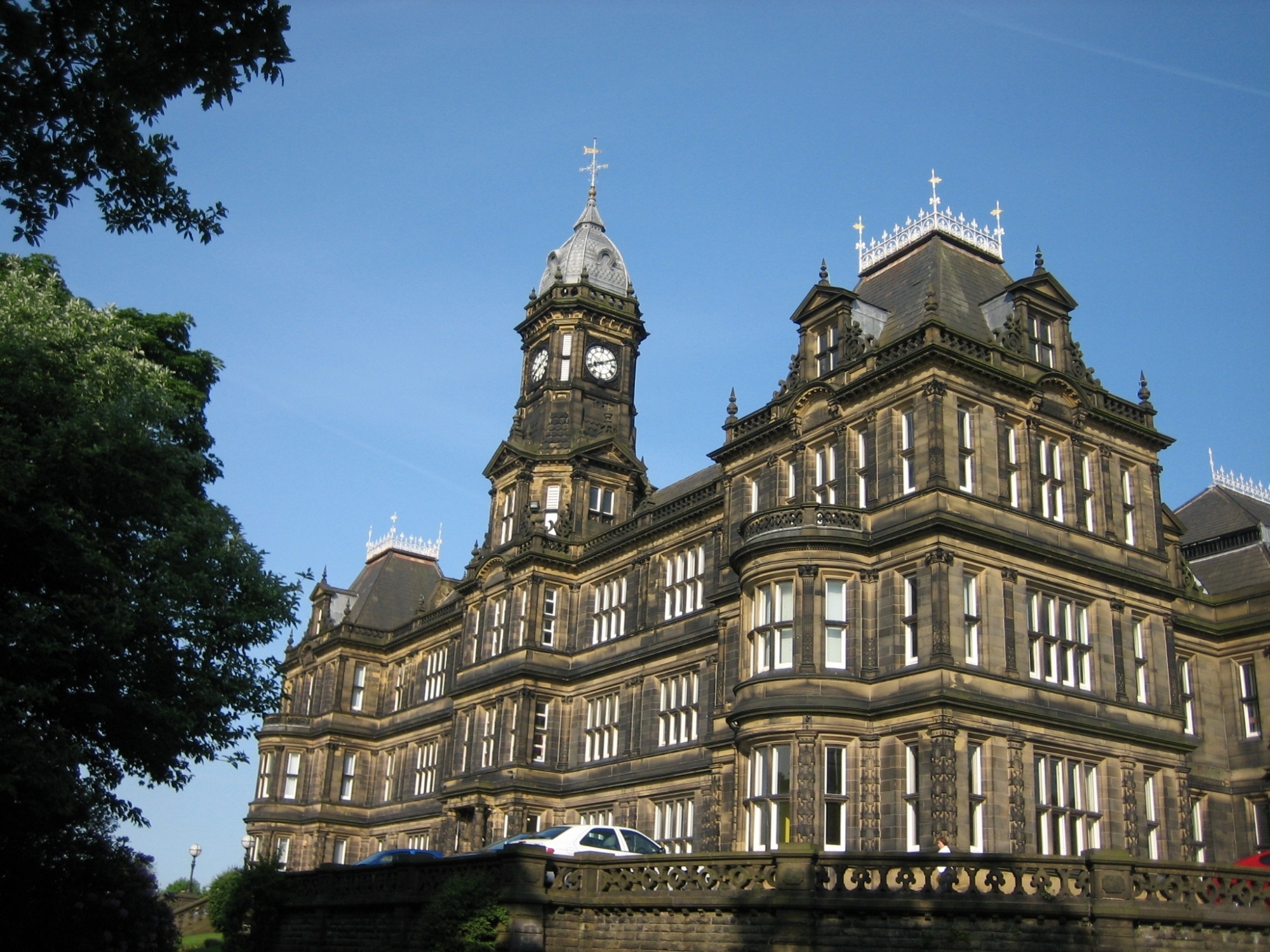
The Crossley Heath School